Visit The Character Effect website
The
Character
Effect
Visit The PCX website
PCX
App Coming Soon!

Beech Acres

April 20, 2020

Calming Canteen graphic for BAPC
Mindfullness

Create a Calming Canteen and Feel the Benefits of Mindfulness

Create a Calming Canteen and Feel the Benefits of Mindfulness Focusing on mindfulness can help your family find ways to calm their minds and bodies. Mindfulness can ease stress and reduce anxiety. Create a calming canteen with this fun download and feel the benefit of mindfulness. Materials and Directions: With your family, take a clean Plastic Bottle and squeeze a small amount of Glue into the bottle (1-2 squeezes, about the size of a quarter). Now add about 1 tablespoon of Glitter to the bottle. If you would like to add a pop of color, add 2-3 drops of Food Coloring. Fill your canteen with water. Now you are ready to Super Glue or hot glue the top on the bottle to ensure the lid stays on tight. Use Your Canteen: Shake your Calming Canteen for 20-30 seconds. Notice how cloudy it is and how you can no longer see through to the other side. This is how your mind looks when you are upset, overwhelmed or on emotional overdrive. When our mind feels like this we have a hard time focusing, making good decisions, and interacting with others. Take three deep breaths. Breathe in through your nose and out through your mouth. As you take these deep breaths notice the glitter starting to settle, along with your own mind. Notice how all the glitter has settled and the water is clear again. Do you feel calmer? Is your mind less cloudy? How might you use this activity at home? Download this activity. 

Photo of a mother clapping as her daughter washes her hands
COVID-19, Parenting Tips

Talking To Your Kids About Coronavirus

Talking To Your Kids About Coronavirus Guest Blogger Kerry Brown, Parent Connext Parenting Specialist, Beech Acres Parenting Center Uncertain Times During these uncertain times, it might feel overwhelming to share information about COVID-19 with your children. As parents, we sometimes think we are protecting by not telling them about scary things; as if shielding them will protect them from the bad feelings or discomfort in this stressful time. In reality, our children pick up on far more than we give them credit for. This is why it is important to share information with them but in an age-appropriate manner. Clarify Facts for Your Kids Sharing facts about COVID-19 can be done in a non-threatening way and actually alleviate some misconceptions they may have created in their minds by not telling them. When children hear something they don’t understand, they tend to create a story that makes sense to them. For example, I worked with a 6-year-old patient in the hospital who had edema. When I assessed his understanding of why he was in the hospital, he thought he had a demon in his body. He had heard the word edema said by the medical staff and his parents, but he had no context for that word, so the word that he did have a context for was a demon. Sometimes a child’s interpretation can be far more terrifying than if we had just explained what was going on. Start The Conversation If you have not had a conversation with your child about coronavirus or COVID-19, start with asking what they have heard about why we are staying home, or if they’ve heard the words coronavirus or COVID-19. If so, ask what they know and if they are wondering about anything. If not, start by explaining that it is a disease or illness that can make people feel sick. Coronavirus is very contagious. Contagious means it can spread or be shared between people very easily when we cough or sneeze. For kids, the virus has mostly been mild or not really bad, but it can be harder for older people (like grandma or grandpa) or people who are already sick, so to help keep them healthy and safe, we are staying home to not share or spread germs.   Explain What You CAN Do There are things we can do and ways we can help, and one is by washing our hands a lot and sneeze or cough into our elbows. It’s also important to keep things clean, like doorknobs, faucets, tables, and counters. You can help at home by helping clean and keep your hands clean. You can also help by making cards for family members we aren’t able to see, or writing notes with chalk on the sidewalk to neighbors. We can also write thank you notes for doctors, nurses, grocery store staff, or anyone who still has to go to work to help us stay safe and healthy. Ask your child what they might want to do to help people feel better. Here are some links for great resources on talking with your children: Resources https://beechacres.org/beech-roots/ https://www.npr.org/sections/goatsandsoda/2020/02/28/809580453/just-for-kids-a-comic-exploring-the-new-coronavirus https://www.facebook.com/tellnowhitelies/videos/234834407639510/UzpfSTEyMDM5ODYxMTc6MTAyMjI3NjE2OTEzMjk5MTY/

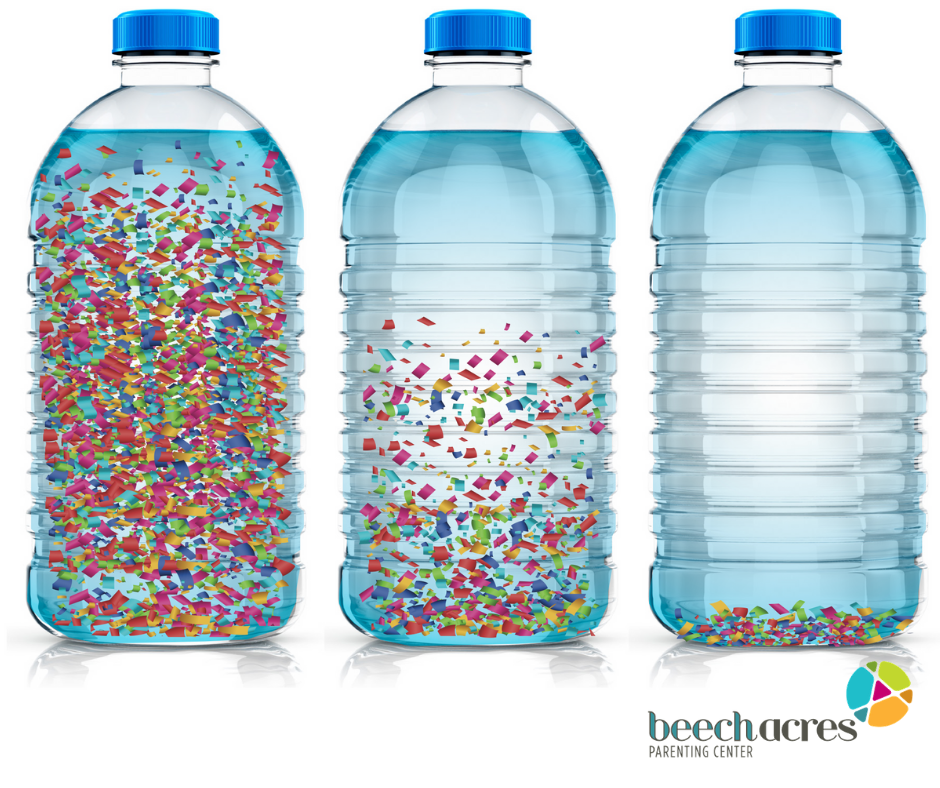
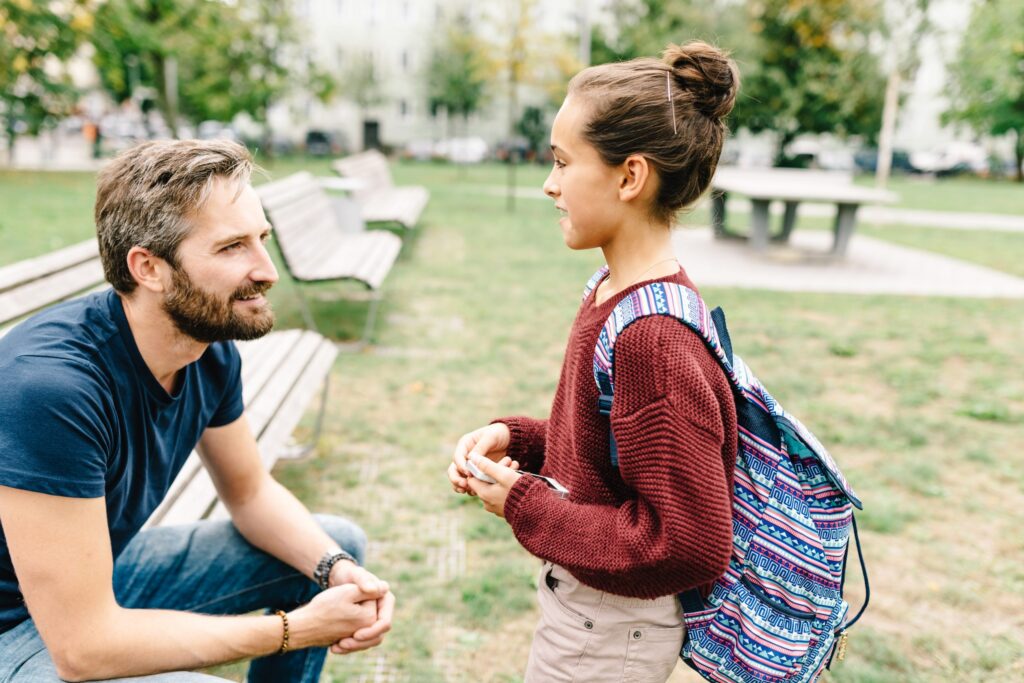
Photo of a man sitting on a bench while talking to a young girl
Discipline, Parenting Tips

Keep Your Cool; Approach Discipline From a Teaching Perspective

Keep Your Cool; Approach Discipline From a Teaching Perspective April is National Child Abuse Awareness Month.  We know that reducing risk factors is the key to prevention. Isolation and financial concerns are two major factors that are increasing anxiety and stress during the COVID-19 pandemic and associated stay-at-home orders. Job loss, illness, grief, and uncertainty are exacerbating the stress we are all feeling. Many of us are not parenting at their best under this heightened pressure. According to a survey of over 500 adults featured in USA Today, 1 in 6 parents have reported spanking or slapping their children during this crisis. How do parents balance stress, patience, and effective discipline during a pandemic? Approach Disciple From a Teaching Perspective First, understand that discipline should be rooted in teaching. Teaching in the moment is intentional and can allow a parent to guide their child’s behavior toward more self-control. Think about the outcome you want from the interaction with your child. A teaching approach empowers children to have alternate options when situations occur and allows them to apply critical thinking. Choose Your Battles Remember that your children are under the same increased stress. These circumstances are just as difficult for them as they are for you. Power struggles are normal and probably are increasing the longer you stay home. Choose your battles. Give your child choices and consequences associated with those choices.  It eliminates the power struggle. Maintain a Routine As parenting specialist Connie Harrison wrote last week, sticking to a routine is important because a routine or schedule is a pattern the brain recognizes and appreciates. Try and stick to your structure because children need a routine. School time, naps, snacks, chores, access to technology, etc. should be on a schedule throughout the day. Children will know what to expect and it can ease their anxiety. Remember though you may need to be a little flexible when needed though to maintain peace. Take a Breath If you feel yourself, losing control, take a deep breath and walk away. Tell your child you need a moment, go into another room. Return when you are calm. This is also can work as a way to model self-calming behavior when children are losing control. Model what you want to see in your children.  They need to see their parents adapting to this “temporary normal” and coping in healthy ways. These “moments” can become a part of your tool-kit that you are using to manage stress. If you need some structure, here is a quick exercise to help you breathe out your stress. “Knowledge is our strongest weapon” in combating the pervasive issue of child abuse, according to the National Children’s Alliance. Reach out for help and know that there are other parents struggling with what to do at the moment when yelling seems easier. Check-in on other parents too.  It’s good to stay connected with one another.  Together we are stronger. If you suspect that others aren’t coping well and a child may be at risk, call your local child protective agency. In most cases, your report will be anonymous, and you may save a child as well as help a parent get back on the right track.

Scroll to Top