Visit The Character Effect website
The
Character
Effect
Visit The PCX website
PCX
App Coming Soon!

Beech Acres

2018

Blue, orange, green, and pink "Make. Sell. Give." graphic
Beech Acres, Donate, Gratitude, Natural Strength Parenting™

Your Kids Are Loving, Kind, and Creative. Let Them Share That.

Natural Strength Parenting™ helps parents uncover their family’s strengths with a mindful framework for intentional growth. Experience NSP™ through Make. Sell. Give. Make.Sell.Give. is a unique opportunity for families to be creative and to give back to their communities together. Make family time a priority by intentionally setting aside time to spend together. Creating these mindful, meaningful moments, without outside distractions is a great opportunity to model family values. Get curious with your children about what they are passionate about and how they would like to be contributors to their community. Children that focus on how they can help others, not just on what they want, experience greater happiness. Sell into strengths, connect and prioritize time together as your family works towards a common goal to empower family members and strengthen family relationships. Children will have an opportunity to discover their own strengths such as how creative they are, the importance of teamwork and their perspective can be different than others on how to reach goals. When a child is determined to be successful at fundraising, their strength of perseverance shows up. There is no greater way for a child to experience a boost in their confidence than to know their strengths. Giving to others gives people an opportunity to show their gratitude for your generosity; with your support, people are helped in ways they could not be otherwise. But did you know that the person giving actually feels gratitude as well?When children experience making a difference in other people’s lives, it is experiencing kindness, compassion, and empathy in the most profound way. Get started by downloading a Make.Sell.Give. “Our Family Cares ‘funsheet’” today. Whether you give to Beech Acres Parenting Center or another charitable organization we’d love to see your creation! Share on Facebook or Twitter with the hashtag #OurFamilyCares or #MakeSellGive so we can see your creativity! To learn more about Natural Strenght Parenting™ or to donate to Beech Acres Parenting Center visit our website.

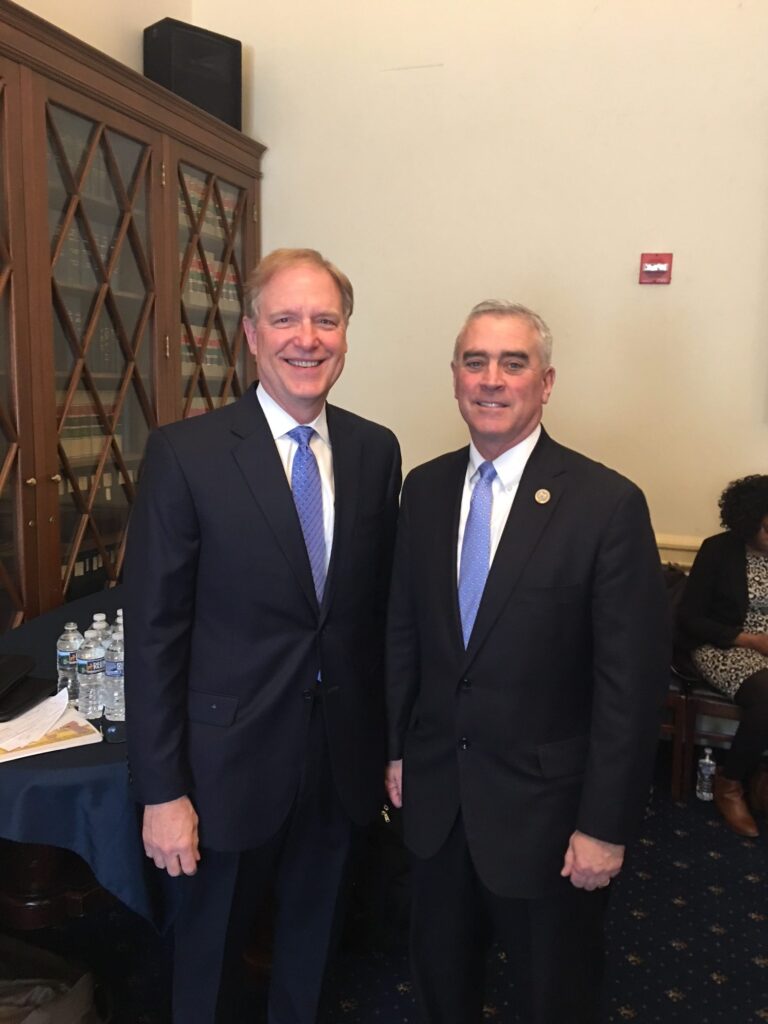
Photo of two men standing next to each other and smiling while wearing black suits
Beech Acres, Opioid Epidemic

Jim Mason Visits Congress to Discuss Opioid Epidemic

Jim Mason, Beech Acres Parenting Center President & CEO was in Washington, D.C., on Wednesday, March 14, to present to members of Congress and their staffs about the impact the opioid epidemic is having on the children, families, foster parents and organizations who make up the larger child welfare system. He shared specific recommendations to stem the rising tide of children whose futures are at risk due to the largest epidemic of its kind in our nation’s history. “We need an integrated system of child welfare, substance use, mental health, enforcement, and other resources, so the appropriate services are available when needed to help each child and family,” Mason said. “It is also vital that we expand and support each community’s ‘help-force’; those extended family members, foster and adoptive parents, and professionals who dedicate themselves to the well-being of children and families so they can heal from the trauma they experience.” Read the press release here.

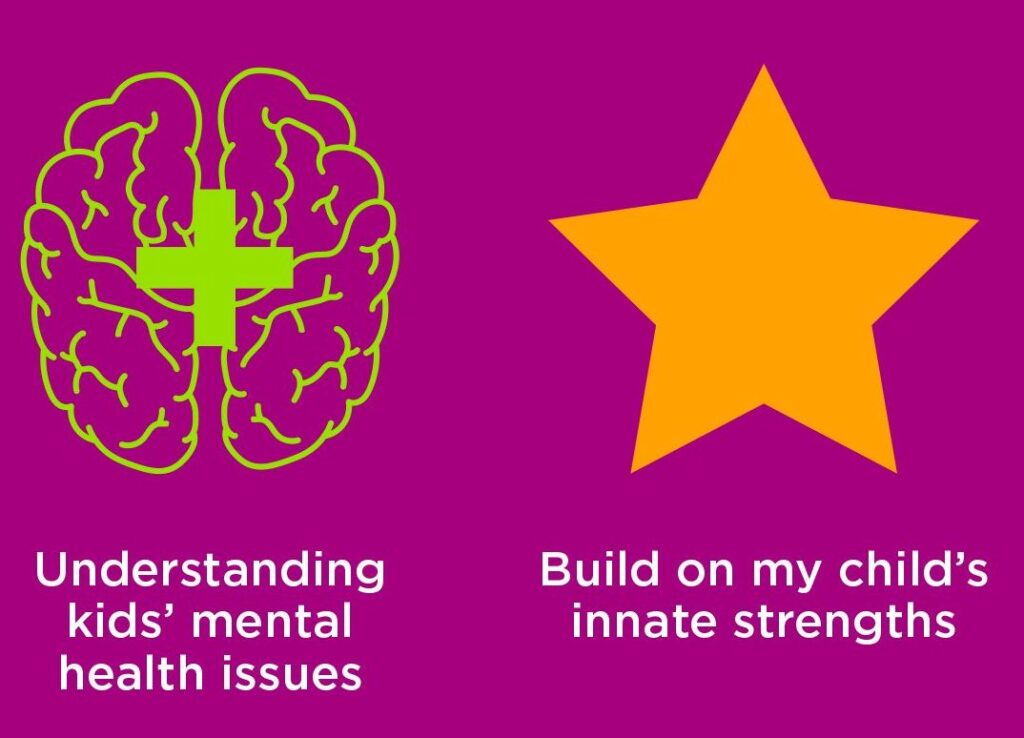
Purple receiving help graphic with a brain and a star icon featured on it
Beech Acres, Cincinnati Parenting Survey, Natural Strength Parenting™

American Academy of Pediatrics Updates Recommendations for Mental Health Screenings

The American Academy of Pediatrics recommended today that children ages 10-21 are screened annually for signs of depression. This new recommendation is the first major update to their guidelines in 10 years. Previously, the recommendation was for screenings to begin at age 12. One in five adolescents 13-18 have or will have a serious mental illness. According to the National Alliance on Mental Illness, nearly half of all lifetime cases of mental illness begin at just 14. Those who are suffering may have difficulty connecting with their family and friends. They might struggle in school. They may abuse drugs or alcohol. If left undiagnosed and untreated they may suffer physical consequences including suicide. Suicide is the 3rd leading cause of death in children and young adults ages 10-24. And 90% of those who died by suicide had some type of underlying mental illness. Parents are concerned, and rightfully so, about their kids’ mental health. Last year Beech Acres Parenting Center surveyed over 600 Cincinnati are parents and discovered that 44% of parents identified understanding kids’ mental health issues as extremely or very concerning. “Knowing that parents are thinking about mental health is encouraging, because parent involvement and early intervention are critical keys in treatment,” Jim Mason, Beech Acres Parenting Center President & CEO said. “We want parents to know that they can find help with these concerns from Beech Acres, where the focus is on building a team of professionals from psychiatry, counseling and child development to provide the best care.” Parents also indicated that they were interested in receiving help in the following areas; understanding kids’ mental health issues, understanding kids’ emotional development, and building on their children’s innate strengths. Concerned parents should talk to their pediatrician, and their children, about mental health issues right now.   We can help you build resiliency in your child by helping you identify their strengths in a parent coaching session. Here you will learn about Natural Strength Parenting™ our unique, strengths-based approach to parenting. Mental health is a serious concern and requires serious attention. The American Academy of Pediatrics recommendations are an important part of the solution. Beech Acres Parenting Center encourages all parents to seek help if they need it and together we will raise capable, caring, contributing children.

Photo of a little girl using a tv remote as a boy sits beside her
Beech Acres, Parenting Tips, Parents

How To Talk To Your Children About What They See On The News

Parents, teachers, schools, or other organizations, you can download this information to share with parents in your community.  Bad, scary, or negative news can be traumatic for children of all ages. “Bad” news can be anything; natural disasters, local or global political strife, mass shootings, the fallout from the drug epidemic, or even a fire in your neighborhood. It is important for parents to be prepared to talk with their children about things they may see and hear on the news. Here are some tips to help you get started. First, Take Care of Yourself Process your own feelings related to the event. Then you can model appropriate expressions of sadness, worry, or anger that will normalize those feelings experienced by your child. Children often look to their parents to make sense of how they are feeling. This is a great opportunity to build empathy for others. Next, Be Honest with Them  A truthful approach will help them better understand the facts about what they are hearing. Frequently our children are already hearing about events through social media or what they hear from friends. Listen as they tell you what they already know and try and separate facts from rumors and embellishments. Always Listen to Their Questions and Address Their Concerns Younger children may need reassurance that they are safe, while your older kids may have more in-depth questions to help them understand and process. Be patient. It is completely normal if a child doesn’t have much to say in the beginning. Let your child know that you are there whenever they have questions or want to talk more. It is important to address their concerns as they arise and offer your perspective based on your family’s values. Finally, Offer Them Hope Reassure them that they are safe and talk through their feelings. Develop a plan for your family in case they encounter dangerous situations. Unplug from media for a while and spend some quiet time together as a family. Physical comfort such as a hug can go a long way to a child developing a sense of inner security. You can also research ways your family can help families affected by these tragedies. Look for the stories of the helpers and the heroes in these events to balance to reinforce that there is so much good even in times of tragedy.

Photo of a child standing with his arms folded while wearing a blue cape
Beech Acres

Every Hero Needs a Sidekick! Support Our Kickstarter Campaign Today!

ArtWorks Cincinnati & Beech Acres Parenting Center are turning extraordinary kids into ordinary heroes! But we need your help! Youth apprentices from ArtWorks meet the kids, identify their strengths, and discover their real-world superpowers! they will design a cape together that represents those powers. What do you say, citizen? Will YOU help turn a super kid into a super hero? Become a sidekick by supporting our Kickstarter campaign today!   https://www.kickstarter.com/projects/2026249708/beech-acres-parenting-center-super-hero-design-com?ref=user_menu

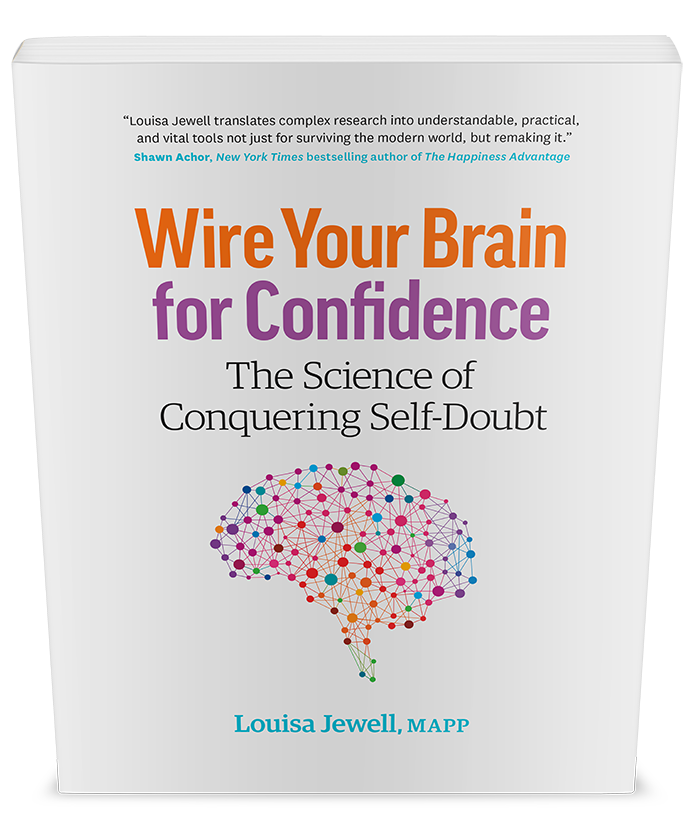
Photo of the "wire your brain for confidence" book cover
Beech Acres, Raising Positive Children

Book Review: Wire Your Brain For Confidence The Science of Conquering Self-Doubt By Louisa Jewell; One Dad’s Perspective 

Guest blogger, Rich Richmond, Marketing Associate What Is Self-Doubt? Early in her book Wire Your Brain For Confidence The Science of Conquering Self-Doubt Louisa Jewell shares a personal story of self-doubt that started her on her journey to becoming an expert in “positive psychology”. The story relates an experience from college where her cheerleading team found a level of success in competition, and despite that success, Jewell was still convinced she should have failed. The overwhelming feeling of self-doubt she felt in spite of the team’s success led her to study how the brain functions in terms of self-doubt and more importantly confidence. This personal story establishes Jewell’s approach and her credibility in an approachable way. It is a good start to a book that is presented as a journey of sorts. Jewell discovered that rapid change and uncertainty were large factors in the self-doubt so many of us feel. Historically change was a rare occurrence. In general, people lived in the same place and did the same things. But as we evolved change accelerated and began having a great impact on the world. “Fast forward four hundred years and you will find that change is the only constant in our lives. Today’s world is fast-paced, complex, and even changing.” Jewell writes. She recognizes as many scientists concur, that our brains cannot deal with these changes quickly enough. This leads to questioning, uncertainty and ultimately self-doubt. What Is Self Efficacy? Jewell’s book is not just about overcoming self-doubt to find confidence. On a deeper level is about self-efficacy. Self-efficacy, how one uses their own personal judgment to act upon certain situations, cannot only inspire confidence, it can lead to real change in overcoming self-doubt. Jewell describes self-efficacy as “the courage to act, that defining moment when you want to say yes but you are stopping yourself.” Her book is designed to give you the tools to say yes. Wire Your Brain For Confidence The Science of Conquering self-doubt is set up as a guide to understanding your brain and finding ways to use that understanding to build confidence. She does so by presenting the research, the brain science, behind her assertions in a scientific yet relatable way. She then turns that research into exercises sprinkled throughout the book that builds on each new understanding. The key is to use these tools to better yourself. Her presentation of the science, relatable stories, and tools for success are an effective presentation. Failure Jewell effectively visits and discusses the topic of failure. What is interesting is not only that she admits that failure is a part of the journey, but that she separates it from self-doubt instead turning it into a tool for confidence. “It is not our failure that matters, it is our recovery,” Jewell writes. “What is truly important is what you say to yourself after.” She spends two chapters late in her book focusing on what to do when you face failure and how to embrace it. The two exercises in these chapters were among my favorites and most useful Separating Facts From Stories and Know Your Resilience Strengths help you focus those failures and really learn from them. Flourishing “You don’t want to just survive, you want to thrive. I call this feeling-being successful but also healthy and happy- flourishing.” I like that Jewell ties everything together on the elevated concept of flourishing. She doesn’t just want you to be successful. Or confident. Or simply happy. She wants you to truly flourish. This idea is powerful and important to all aspects of our lives. This book gives you the science to understand where your lack of confidence stems from, the tools to restore that confidence and the self-efficacy to want to flourish. Woman Inherits the Earth Jewell opens her book with a powerful statement on “Why women need to rule the world”. It reminds me of one of the best scenes in Jurassic Park where Laura Dern’s character ruminates on men destroying the world, being eaten by dinosaurs, and women inheriting the earth. There is no doubt that this book in many ways is aimed at equipping women with tools they can use to overcome self-doubt and flourish. At a time when women’s issues are at the forefront of public discourse, her introduction to the book is relevant, important, and effective. Her tools are universal, and really at this point that is how things should be. I can see using these tools not only personally, but to help build confidence in my daughter. I see her struggle with self-confidence every day. Specifically, Jewell’s tips on recovering from failure (a bad grade on a test, a rough day on the soccer pitch) and using that as an opportunity to build resilience have real value and application in my life as a dad. Wire Your Brain For Confidence The Science of Conquering self-doubt is not surprisingly presented very confidently. The science is not too clinical and even when it starts to be Jewell ties it together in a relatable exercise or story. She ties her holistic approach in with other more familiar success strategies; positive self-image, growth mindset, surrounding yourself with positive people, etc., that make her approach relevant and contemporary. See Louisa Jewell LIVE as Raising Positive Children: Global Author Series presented by Mayerson Academy, Beech Acres Parenting Center, and Children Inc. continues February 15th. Get your tickets here.


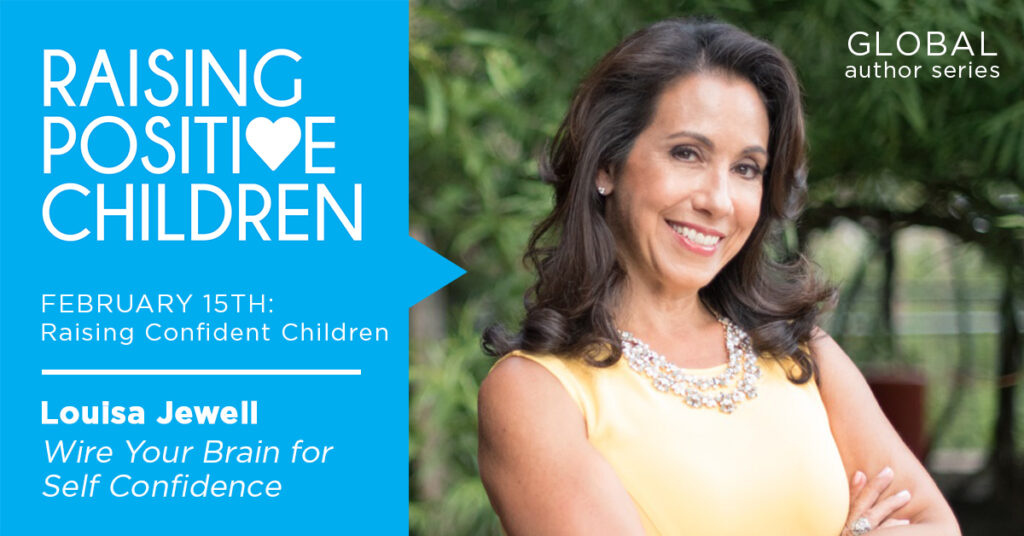
Blue Raising Positive Children graphic with a photo of a woman in a yellow dress
Uncategorized

Raising Positive Children: Global Author Series Continues on February 15th with Louisa Jewell

The Raising Positive Children: Global Author Series continues on February 15th! Mayerson Academy, in partnership with Beech Acres Parenting Center and Children, Inc., welcomes Louisa Jewell to Cincinnati for Louisa Jewell: Raising Confident Children. Louisa Jewell is a speaker, author and positive psychology expert who has facilitated thousands of people towards greater flourishing both at work and in their personal lives. Her book Wire your Brain for Confidence; The Science of Conquering Self-Doubt was released in September 2017. Get your tickets now! https://www.eventbrite.com/e/raising-positive-children-global-author-series-tickets-39517667407

Blue raising positive children graphic with white images of books leaning on each other
Beech Acres, Natural Strength Parenting™, Raising Positive Children

An Evening with Lea Waters: Raising Strong Children Recap

On January 11th, Mayerson Academy, Beech Acres Parenting Center and Children, Inc. welcomed author Lea Waters to Cincinnati as part of the Raising Positive Children: Global Author Series. Dr. Waters is an Australian psychologist, academic, researcher, author, and speaker who specializes in positive education, parenting, and organizations. Her book, The Strength Switch (see our review here) details the benefits of focusing on and building your child’s strengths before focusing on their weaknesses. The event was a huge success that saw parents leaving with a new perspective on strength-based parenting. Don’t miss the next Raising Positive Children event, Raising Confident Children featuring Lousia Jewell, on February 15th. Louisa Jewell is a speaker, author, positive psychology expert and the founder of the Canadian Positive Psychology Association (www.cppa.ca). She has facilitated thousands of people towards greater flourishing both at work and in their personal lives. Get your tickets now! Mayerson Academy president Jillian Darwish welcomes Dr. Waters to Mayerson Academy. “You do need to work on your child’s weaknesses, there is no doubt about that. The absence of a weakness is not the same as the presence of a strength. If you start with strengths we are starting with them at their best.  -Dr. Lea Waters “When we are talking about strengths-based parenting we are talking about a style of parenting that seeks to connect our children with their unique talents and strengths.” -Dr. Lea Waters “We are hardwired to have strengths. Everyone has them. Everyone has the capacity for resilience. Your child is stronger than you think.”  -Dr. Lea Waters

Blurry image of children walking down a hallway with backpacks on
Cyberbullying, Human Trafficking, Online Safety, Parenting Tips, Sex Trafficking

National Human Trafficking Awareness Day

Today is National Human Trafficking Awareness Day. National Human Trafficking Awareness Day is designated to bring awareness to the plague of Human Trafficking. According to the National Center for Missing and Exploited Children, nearly 25,000 runaways were reported in 2017. Of those, an estimated 1 in 7 were possible victims of child sex trafficking. This sobering statistic heightens the importance of being aware of the global problem of human trafficking. Be Aware As a busy parent, the possibility of having to deal with this issue is likely a low priority on your list of daily concerns. While the likelihood of your child becoming a victim is remote, it is important to be aware of the issue and look for signs of human trafficking in your community. The National Human Trafficking Hotline lists a number of “red flags” to look for in your community. These include: Common Work and Living Conditions: Person is not free to leave or come and go as he/she wishes Person is in the commercial sex industry and has a “manager” They owe a large debt and is unable to pay it off Poor Mental Health or Abnormal Behavior: Person appears fearful, anxious, depressed, submissive, tense, nervous or paranoid Person exhibits unusually fearful or anxious behavior after bringing up law enforcement They avoid eye contact Poor Physical Health: Person doesn’t have medical care and/or is denied medical services by employer Person appears malnourished or shows signs of repeated exposure to harmful chemicals They show signs of physical and/or sexual abuse, physical restraint, confinement, or torture Often, bizarre security measures inconsistent with the rest of the area exist in the work and/or living locations. Look for opaque or boarded-up windows,  bars on windows, barbed wire, security cameras, etc.. How to Protect Your Children Tell your child to always be aware of their surroundings, be wary of communicating with strangers, and always have their cell phones with them (and charged!) with family and emergency contacts programmed in. Helping your child develop and maintain a good self-esteem and healthy relationships, you reduce the risk that he or she will be targeted by traffickers. Nationwide Children’s Hospital offers some tips on their website including: Know what your kids are doing online. (check out our recent tips on online safety) Know who your kids are with and where they are hanging out. There are obvious situations, like being on the street late at night, but even places like the mall can be dangerous. Teach your children resiliency. Help your child build a strong self-esteem from an early age. Maintain open communication with your child. Be someone the teens in your life can talk with. Awareness and caution are key to recognizing, reducing, and preventing human and sex trafficking. If you have any questions or concerns about this topic visit the National Human Trafficking Hotline or the National Center for Missing and Exploited Children websites.

Headshot photo of a woman sitting with her arms folded on a table
Beech Acres, Parenting Tips, Parents, Raising Positive Children, Strengths

Don’t Miss Lea Waters: Raising Strong Children Tomorrow Night at Mayerson Academy!

Don’t miss the first event in the Raising Positive Children: Global Author Series tomorrow night at Mayerson Academy! Mayerson Academy and its partners Beech Acres Parenting Center and Children, Inc. are pleased to bring luminaries in the field of positive psychology to our region to share the best in current, applied science for building positive parenting capacity. Raising Positive Children: Global Author Series begins tomorrow as Dr. Lea Waters presents Raising Strong Children January 11th from 6-8 at Mayerson Academy. Lea Waters Ph.D. is an Australian psychologist, academic, researcher, author, and speaker who specializes in positive education, parenting, and organizations. Lea is the 2017-2019 President of the International Positive Psychology Association and serves on the Council of Happiness and Education for the World Happiness Council. She lives in Melbourne, Australia, with her husband, son, and daughter. Get your tickets now!

Scroll to Top